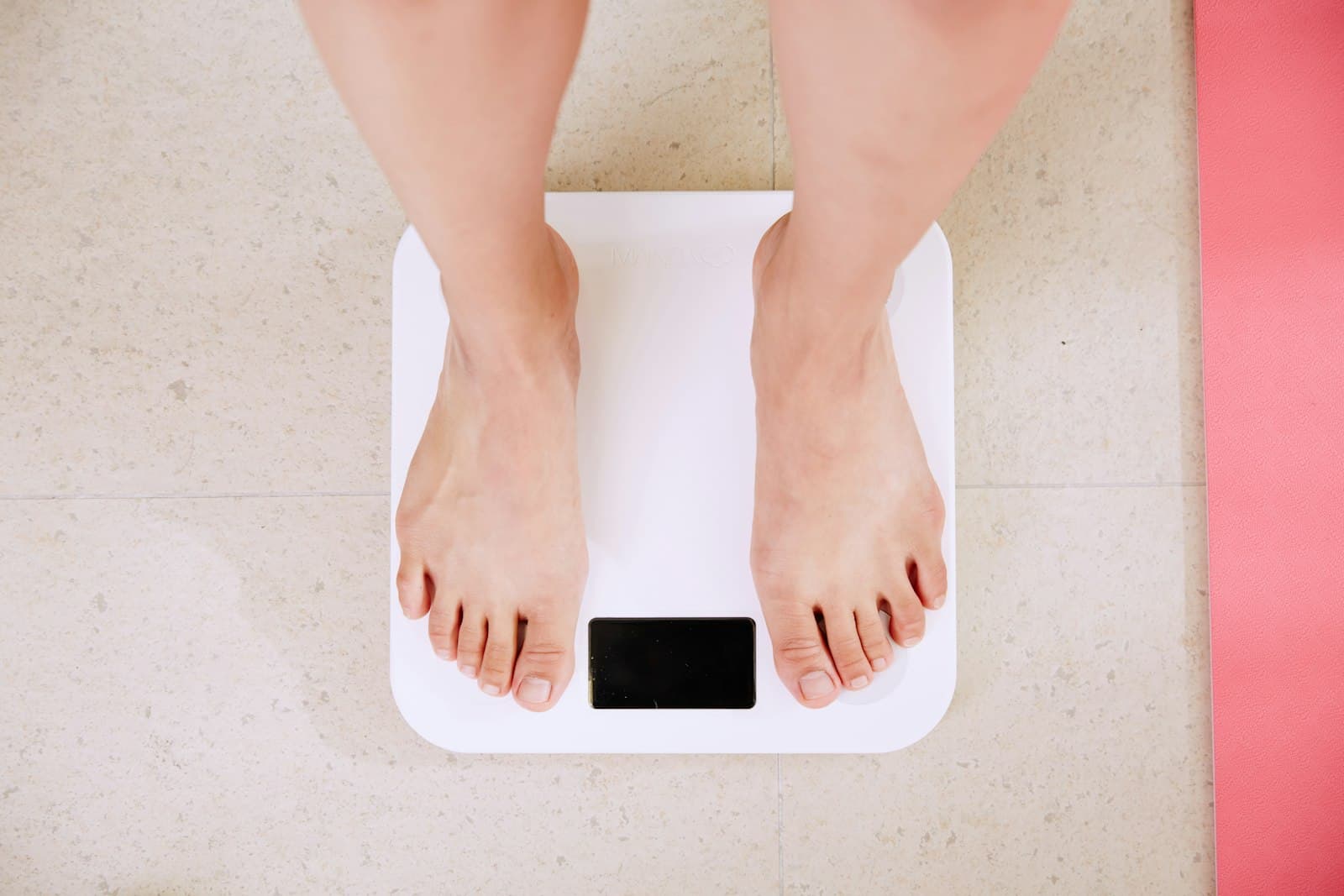
You step on the scale two mornings in a row and it's up 1.3 kg (about 3 lb). You didn't eat 10,000 extra calories overnight — that's physically impossible — so the number isn't lying about fat, exactly. It's just answering a different question than the one you're asking.
The number moves for reasons that aren't fat
Body-fat change is slow and steady. Your body weight is anything but, because most of what the scale measures on any given morning is water and the contents of your body — both of which shift by the hour. A gain or loss of a kilo or two, day to day, is almost never fat. The usual suspects:
- Water and sodium. A salty meal makes you retain water for a day or two. It leaves as quickly as it came.
- Glycogen. Carbohydrate is stored in your muscles with water attached — roughly 3 g of water per gram of glycogen. Eat more carbs and you hold more water; eat fewer and you shed it. This is why low-carb diets show a dramatic "loss" in the first week that is mostly water, not fat.
- Hormones. Menstrual cycles, in particular, drive predictable water retention of a kilo or more that has nothing to do with your diet.
- Gut contents. Food and fibre in transit have weight. You weigh less after a bowel movement and more after a big, fibrous meal — obviously, once you say it out loud.
- Sleep, stress and travel. Poor sleep and high stress raise water retention. A long flight can add a kilo of swelling on its own.
Add these up and a perfectly good fat-loss week can show a higher number on the wrong morning. The scale isn't broken. It's just noisy.
Read the trend, not the day
The way to hear the signal through that noise is to stop reading individual days and start reading the trend.
Weigh yourself daily if you like — but instead of reacting to each reading, average them across a week or two, and compare this fortnight's average to the last. That rolling average smooths out the water swings and reveals the slow, real direction underneath. Over one to two weeks, fat loss shows up clearly even while any single morning bounces around.
This reframes the whole relationship with the scale. A single high reading isn't a setback or a verdict on yesterday — it's one noisy data point in a series. The trend line is the truth; the daily number is weather.
A heavier morning isn't a failure — it's usually just water. Don't let one reading rewrite a good week. I'll watch the trend so you don't have to carry that number around all day.
If the number has too much power
Worth saying plainly, in an article arguing you should weigh yourself often: for some people the scale isn't a neutral instrument, and no amount of understanding the noise makes it one.
If stepping on it sets your mood for the day, if you find yourself weighing repeatedly to get a better number, or if the reading changes how much you let yourself eat, then the daily habit is costing you more than the data is worth. Weigh weekly instead, or not at all — the trend still works with fewer readings, and your clothes and your training will tell you plenty. If that pattern feels bigger than a habit you can adjust, talk to your doctor. This is common, it's treatable, and it isn't a discipline problem.
How to weigh so the data is worth reading
If you're going to weigh, do it in a way that keeps the noise consistent, so the trend means something:
- Same time of day, ideally first thing in the morning.
- After using the bathroom, before eating or drinking.
- In similar clothing, or none.
- On the same scale, on a hard floor.
Consistent conditions won't stop the fluctuations, but they keep them roughly even from day to day — which is what lets the underlying trend show through.
Where BMI fits (and where it doesn't)
BMI — body mass index — is worth a mention because it's everywhere, and it's widely misunderstood. It's a rough population-level screen from your height and weight, useful as a first glance at whether you're in a broadly healthy range. If you want to see yours, the BMI calculator will give it to you.
But treat it as a blunt instrument. BMI can't tell muscle from fat, so a lean, muscular person can read as "overweight" while missing real risk elsewhere. It's a starting conversation, not a diagnosis — and it says nothing about your day-to-day progress. For that, your weight trend and how your clothes fit will always tell you more.
If the trend itself has genuinely been flat for six weeks or more — not bouncing, flat — that's no longer noise and it has its own set of explanations: why am I not losing weight in a calorie deficit. And if you want a realistic date for where the trend is heading, that's the goal weight calculator.
Let Sophia carry the number for you
The scale is genuinely useful data — but only once you stop letting each morning's reading dictate your mood. That's the part worth handing off. Sophia takes your weigh-ins, smooths them into a trend, and tells you what's actually happening: whether you're on pace, holding steady, or ready for an adjustment. So a single heavy morning stays what it really is — noise, not a verdict.