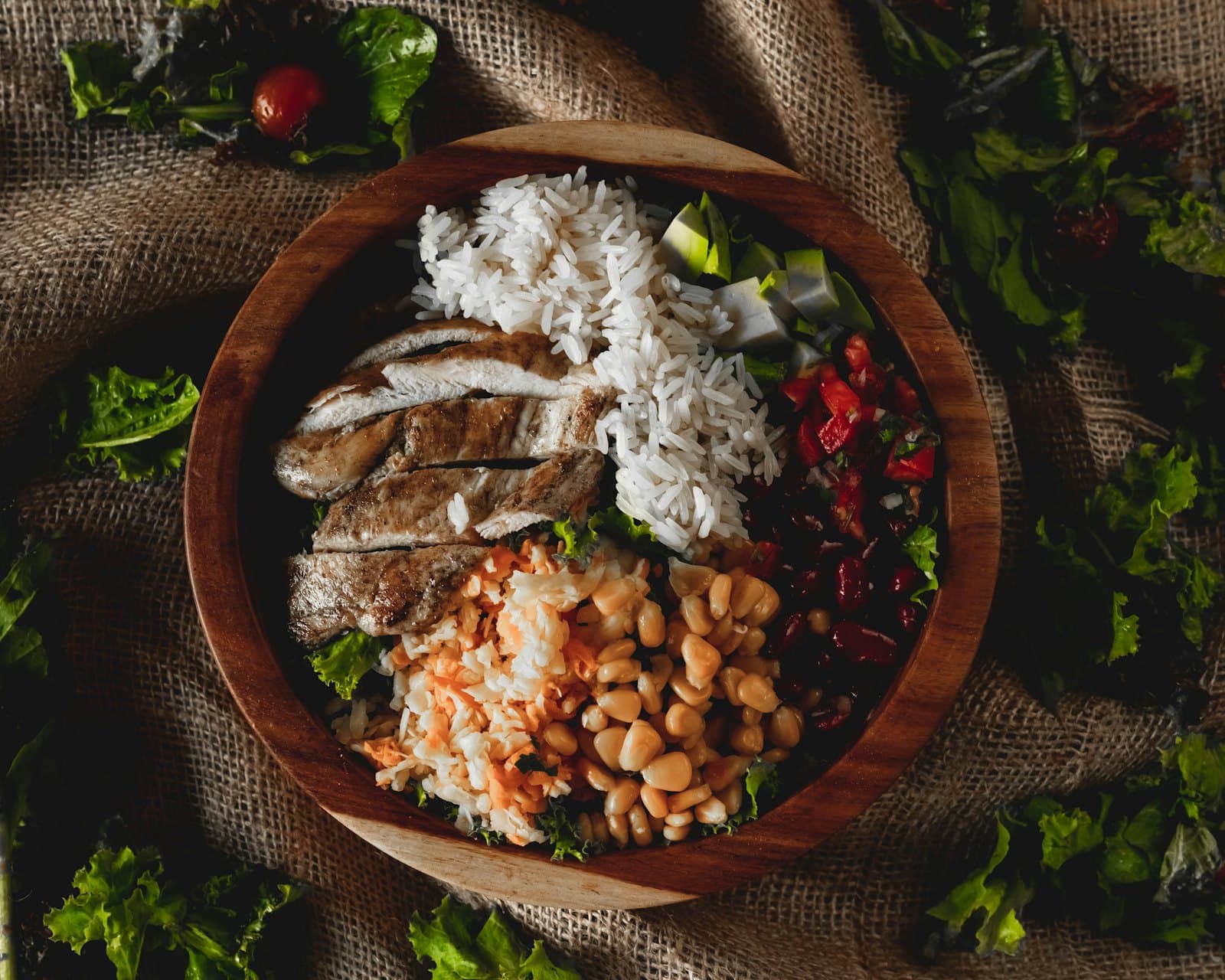
If you've just started lifting and someone has told you to "eat more protein", you've probably also been told a dozen different numbers. Here is the short version, before the detail: somewhere around 1.6 to 2.2 grams of protein per kilogram of body weight a day (roughly 0.7 to 1 gram per pound), spread over three or four meals, with training that gives your body a reason to use it.
That's the whole answer. The rest of this explains where the number comes from, why it doesn't need to be higher, and how to hit it without living on shakes.
The number, and where it comes from
The best evidence here is a 2018 analysis of 49 studies and 1,863 people who did resistance training with different amounts of protein. More protein helped, up to a point. The muscle gained levelled off at about 1.6 g per kg of body weight a day, and the researchers put the upper end of the plausible range at about 2.2 g per kg.
So the honest reading is this: 1.6 g per kg gets most people nearly all of the benefit, and 2.2 g per kg is the safe upper end for people who want to be certain. Above that, you are not building more muscle. You are just buying more expensive food.
For a 75 kg person (about 165 lb), that works out to roughly 120 to 165 grams a day. If you'd rather not do the sum, use the calculator below.
Work out your own number
Choose "Build muscle" as your goal. The calculator works from your lean mass, the part of your weight that isn't fat, because fat tissue doesn't need protein to maintain it. This matters most if you're carrying extra weight, where scaling off total body weight would give you a number much higher than you need.
Daily protein
155–189g
Aim for the upper end on training days.
If you'd like to come back to the number later, the protein intake calculator for muscle gain has a page of its own.
Why it's lower than the number for fat loss
Here is something that surprises people. If you run the calculator with "Lose fat" and then with "Build muscle", the fat-loss number comes out a little higher. For a 75 kg man, the calculator gives about 150 to 180 grams a day for losing fat and about 140 to 170 grams for building muscle.
That is the right way round. When you eat less than you burn, your body looks for energy elsewhere, and muscle is on the list. Extra protein is what protects it, which is why the evidence for people dieting while lifting points to a higher intake. When you eat a little more than you burn, there is spare energy around, so your body has no reason to break muscle down. The protein can go into building instead of defending.
So you don't need to push protein higher and higher to grow. You need enough of it, every day, alongside enough food overall.
Protein needs the other two halves
Protein on its own builds nothing. It needs training that asks your muscles to adapt, and enough total food to build with. Most beginners who stall have the protein right and are either not adding weight to the bar or not eating enough overall.
Spread it across the day
Your body uses protein best in portions. A review of how much protein a single meal can use for muscle-building suggests aiming for about 0.4 g per kg of body weight per meal, across at least four meals. For a 75 kg person, that is around 30 grams a meal.
You don't need to be exact about it. The practical version is simple: put a real portion of protein in every meal, rather than eating very little all day and a huge amount at dinner.
Some easy ways to get 25 to 35 grams in one meal:
- Breakfast: three eggs with a pot of Greek yoghurt, or a bowl of oats made with milk and a scoop of protein powder.
- Lunch: a chicken breast or a tin of tuna with whatever else you're having.
- Dinner: a palm-and-a-half of meat or fish, or a block of tofu.
- Snack: a pot of cottage cheese, a large glass of milk, or a protein shake.
A shake is a convenience, not a requirement. If it helps you reach your number on a busy day, it's useful. If you reach it with food, you don't need one.
How much protein you actually need has a fuller list of foods, and macros explained covers how protein fits alongside carbs and fat.
How much food overall
Building muscle needs a small surplus: eating slightly more than you burn. Slightly is the important word. A large surplus mostly adds fat, and a beginner's muscle can only grow so fast however much you eat.
A sensible starting point is around 10% above your maintenance calories, the amount that keeps your weight steady. If your weight goes up by roughly 0.25 to 0.5% a week, you're in the right range. If it isn't moving after a month, eat a little more. If it's climbing fast, eat a little less.
If you'd rather lose some fat while you build, that is possible too, especially when you're new to training. Can you build muscle and lose fat at the same time covers when it works and how to set it up.
The beginner advantage
If you're new to lifting, you're in the best position you'll ever be in. Your muscles respond quickly to training they have never had before, and the first year is when most people gain the most. You don't need a perfect diet to take advantage of that. You need enough protein most days, enough food overall, and training that gets a little harder over time, which is what progressive overload is about.
Hitting your number most days is what counts. Missing it on Saturday changes nothing. Missing it most days, without noticing, is what holds people back.
Let Sophia keep the count
The difficult part of protein is not knowing the number. It is knowing, at four in the afternoon, how far off it you are. A meal that feels high in protein can fall well short, and by the time you notice, the day is over.
Sophia keeps that count for you. You tell her what you ate in your own words, the way you'd tell a friend: "for lunch I had a chicken wrap and a yoghurt". The more you say, the closer her numbers get: roughly how much chicken, which yoghurt. But a rough description still beats not telling her at all. She works out the protein, keeps a running total through the day, and lets you know when there's a gap while you still have meals left to close it.